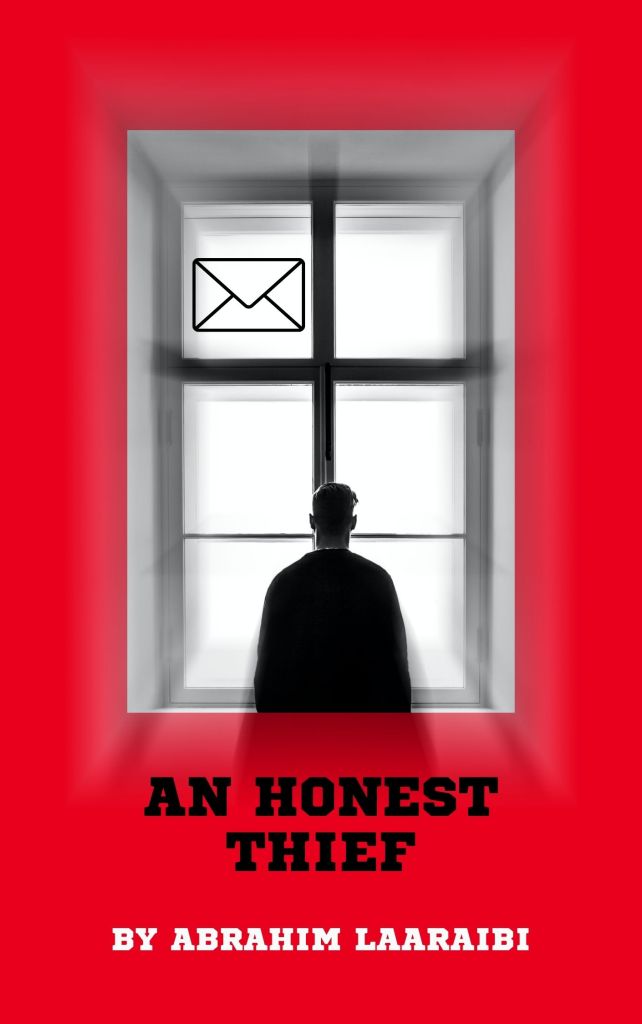
An Honest Thief
by Abrahim Laaraibi
An Honest Thief is a story about conscience in a world that condemns the burglar but honours the men who steal people’s future.
He had come for what he could carry. The smell stopped him.
In the kitchen, a pot stood on the stove with its lid slightly crooked. Cumin, browned onions, meat cooked until it loosened from the bone. Beneath a cloth on the table, bread gave off the last of its warmth. He listened for footsteps in the rooms beyond. Nothing. His stomach contracted so sharply that he put a hand against the counter and waited.
The apartment was on the second floor. He had seen the family leave: a man carrying a shopping bag, a woman fastening a child’s jacket as they descended, the child protesting that he was not cold. Their voices had travelled down the stairwell. Then the building door closed, and he had given them ten minutes.
He had expected an easier latch.
Now a small curl of wood lay near the entrance, pale against the worn tiles. He pushed it beneath the door with his shoe.
In the sitting room, a phone charged beside the sofa. There was a television too large to carry discreetly and a glass-fronted cabinet containing cups nobody seemed to use. He opened a drawer beneath it. Batteries, keys, an envelope.
The envelope held money.
He counted it once, then put it in his pocket without counting again. A second count would not improve the sum.
On the wall above the sofa, the family stood in a photograph taken somewhere with trees. The man wore the same jacket he had left in. The woman was laughing at something outside the frame. The boy had one hand raised across his face.
He looked away.
The smell reached him again.
He had eaten half a bread roll that morning. By afternoon, hunger had stopped making a noise and become a dull soreness beneath his ribs. He had walked until the shops began to close, considering houses, dismissing houses, learning the difference between a light left on for someone and a light left on to discourage him.
In the kitchen, he lifted the lid.
Pieces of meat and potato were coated in a rich sauce. A carrot lay split along its length. He touched the spoon against the inside of his wrist to judge the heat, then tasted what remained on it.
He closed his eyes.
Only a mouthful, he decided.
He found a plate in the cupboard. He took bread from beneath the cloth and tore off a piece, carefully at first, as though the size mattered. Then he served himself.
He remained standing for the first few bites.
The sauce was hot enough to sting his tongue. He swallowed too quickly, tore more bread, dipped it into the plate. A little oil ran over his thumb. He licked it off.
There were three chairs at the table. On the fourth side, a narrow stool had been pushed beneath the cloth. He pulled it out and sat.
From another apartment came the scrape of furniture, then a woman calling someone to wash his hands. Pipes knocked inside the wall. The refrigerator started with a shudder.
He ate more slowly now.
There was a school exercise book beside the bread, its cover softened by use. Across an open page, the same word had been written several times, each attempt a little straighter than the one above it. A pencil lay in the fold.
He moved the book away from his plate.
The potatoes had taken the flavour of everything around them. He broke one with the side of his spoon. The meat needed almost no chewing.
He could remember the last hot meal he had eaten, but remembering it required counting days, and he did not want to do that at this table.
When the plate was empty, he wiped it with bread.
He glanced at the pot.
Enough remained. Less than before, but enough. He told himself this twice.
Then he reached into his pocket for the envelope.
For a moment he held it above the table, feeling the worn paper between his fingers. His mother had kept money in envelopes like this: rent, flour, electricity. The names had changed as debts were paid and new ones arrived. Sometimes a name was crossed out and another written over it.
She had also had a rule about food.
“You do not eat a person’s salt and then harm them.”
She had said it about neighbours, about quarrels, about a man who had borrowed money and denied it afterwards. Once you had eaten at someone’s table, you owed them something that was not measured by the meal.
He had once joked that salt was cheap.
She had looked at him until he stopped smiling.
He stood and returned the envelope to the drawer.
The phone remained beside the sofa. He left it there.
Back in the kitchen, he washed the plate. He washed the spoon too, rubbing a thumb along its handle where sauce had dried. There was a dishcloth hanging from the tap. He rinsed it, wrung it out, and wiped the table.
A drop of oil had fallen beside the stool. He crouched to clean that as well.
He did not know where the spoon belonged. He opened two drawers before finding the others.
The plate was still wet when he heard the key.
He stopped with it in his hands.
The key turned, paused, then turned again. The door scraped against the damaged wood.
“Why is it sticking?” the man said outside.
The thief set the plate on the counter.
The door opened.
The man entered first, a shopping bag pulling one shoulder down. His wife came behind him with the boy. She was still saying something about the price of oranges when she saw the stranger in the kitchen.
Her hand closed around the child’s wrist.
The man put the bag on the floor.
“Who are you?”
The thief raised his hands a little. They were wet.
“Don’t shout.”
The man looked towards the sitting room, then back at him.
“Who are you?”
“I came to steal.”
The wife pulled the boy behind her.
The man took one step towards the kitchen and stopped. His eyes went to the stranger’s pockets.
“What have you taken?”
“Nothing.”
“You broke into my house.”
“Yes.”
“And you’ve taken nothing?”
The thief looked at the pot.
“I ate.”
No one spoke.
The boy leaned around his mother.
“Our dinner?”
“Go into the bedroom,” she told him.
He did not move.
The man looked at the plate, the damp cloth, the pot with its lid replaced.
“You sat down?”
The thief nodded.
“In my house?”
“I was hungry.”
The man gave a short laugh, then reached for his phone beside the sofa. It was still connected to the charger. He pulled it free so hard that the cable struck the floor.
The thief watched his hand.
“I put the money back.”
“What money?”
“In the drawer. The envelope.”
The man crossed to the cabinet and opened it. He took out the envelope, checked inside, then checked again.
His wife went past him into the kitchen. The thief moved aside.
She lifted the lid.
“That was for three people.”
“I left some.”
“I can see what you left.”
He lowered his eyes.
She put the lid down with more force than it required.
Her husband was still holding the phone.
“Why did you put the money back?”
The thief rubbed his wet palms against his trousers.
“I ate your salt.”
“You ate my meat.”
“That too.”
The man stared at him.
“When you eat someone’s food,” the thief said, “you don’t steal from them afterwards.”
“You stole the food.”
“Yes.”
The answer seemed to trouble the man more than an excuse would have.
The wife folded her arms.
“So you remembered your manners halfway through?”
“Something like that.”
Outside, someone climbed the stairs. All four of them listened until the footsteps passed their door and continued upward.
The boy had come out from behind his mother. He stood near the table, looking at the stool the thief had used.
The man lowered the phone, but did not put it away.
“And now we’re supposed to thank you?”
“No.”
“What, then?”
“Let me leave.”
The wife looked at the damaged entrance.
“After breaking the door.”
“I can fix the latch.”
Her husband laughed again.
“You can fix it.”
“The wood around it. I didn’t break the lock.”
“You know the difference.”
“I do.”
The man glanced at his wife. She gave him nothing.
The thief stood without moving while the man checked the bedroom. Drawers opened. A cupboard door struck the wall. When he returned, he looked less certain of what to do, which did not make him less angry.
“You call this honesty?”
“No,” the thief said. “I call it stopping.”
“A thief with principles.”
“The men who asked for your vote ate at your table too.”
The man’s face hardened.
“We are talking about you.”
“I know.”
“Then leave them out of it.”
“Why? They came through the front door. You gave them a chair. Your wife brought them food. They asked after your boy.”
“And you think that makes you better than them?”
“No. I think you know what to call me.”
“A thief.”
“Yes. What do you call them?”
The man said nothing.
“Deputy. Honourable sir. You stand when they enter.”
“You broke into my house.”
“And you called me a thief before you knew my name. They can steal for years and you still call them by their titles.”
“They don’t take an envelope out of my drawer.”
“No. But they handed you one before the election.”
“Not everyone sells his vote.”
“They don’t need everyone.”
“You don’t know what I needed that money for.”
“It was yours before they put it in the envelope.”
The man glanced towards the kitchen. His son was listening.
“They gave a little of it back,” the thief said. “Enough to get through a week. Once they take their seats, they help themselves to the rest.”
“You think I don’t know that?”
“Then why am I the only thief in this room?”
“Because you’re the one standing in it.”
The thief lowered his eyes.
“Fair enough.”
“I’ve worked all my life,” the man said. “I’ve never asked them for anything.”
“You shouldn’t have to ask. It’s your money.”
“And that gives you the right to take mine?”
“No.”
For a moment, neither spoke.
“You worked all those years,” the thief said. “What were you hoping to have by now?”
“That’s none of your business.”
“No. It isn’t.”
The man looked towards his son again.
“I wanted him to have it easier.”
The thief followed his glance. For a moment, he said nothing.
“And when every time they come back for your vote, they’ll promise you that too.”
“Leave my son out of this.”
“I can leave him out of what I say. They won’t leave him out of what they take.”
The man said nothing.
“The money meant for his school. The job he’ll need when he’s grown. They take it now. He’ll find out what’s missing later.”
“And you’re telling me this?”
“You can put me out tonight. Tomorrow they’ll still be in office.”
“They’ve already had enough of my life.”
“And now they’re spending his.”
From the kitchen, his wife spoke.
“That doesn’t make what you did smaller.”
“No,” the thief said. “It makes what they do bigger.”
The wife took three plates from the cupboard. She set them on the table, one after another.
“Check his pockets,” she said.
The thief emptied them before the man asked.
A few coins. A folded cloth. Two keys on a ring. A small screwdriver.
The boy looked at the screwdriver.
“That’s what you used?”
“Yes.”
His mother drew him away from the counter.
The man counted the coins with his eyes.
“Is that all you have?”
“It is now.”
“Keep it,” the wife said. “We’re not selling you dinner.”
The thief gathered the coins and picked up his screwdriver.
The man stepped aside, leaving the way to the door clear.
At the entrance, the thief paused. A strip of wood had split away from the frame where the latch caught.
“I can fix that.”
“Leave it.”
“A longer screw would hold it. Have you got one?”
“You’ve been here long enough.”
The thief lowered the screwdriver.
From the kitchen came the sound of serving. A spoon scraped the pot.
The boy approached, looking at the broken wood.
“Will the door close?”
His father put a hand on his shoulder.
“Go and eat.”
“I could have it done before…”
“Put that away,” the man said. “And go. Before I call the police.”
The thief slipped the screwdriver into his pocket. His coins made a small sound against it.
The man opened the door.
“You watched us leave?”
The thief hesitated. “Yes.”
“How long have you been watching us?”
“Long enough.”
The man kept his hand on the door.
“If I see you on these stairs again…”
“You won’t.”
“You don’t know what I was going to say.”
The thief said nothing.
The wife came to the kitchen doorway. Behind her, the boy had begun eating.
The thief stepped into the stairwell.
The man began to close the door, but the thief turned back.
“Your wife cooks well,” he said. “Take care of her. I came here to steal, and she fed me instead.”
“She didn’t feed you,” the man said.
The thief opened his mouth, then lowered his eyes. He went down the stairs.
The man closed the door and tried the latch. It would not catch. He lifted the door by its handle and tried again. The split wood shifted against the frame.
From the kitchen, his wife called, “Come. It’s getting cold.”
He stood a moment longer, listening to the footsteps descend. Then he dragged a chair from the table and wedged its back beneath the handle.
When he sat down, his son held out the plate the stranger had washed.
“Another spoonful?”
His wife scraped the bottom of the pot.


Leave a comment