Dregs of a Shrine
A story by: Brahim Laaraibi
They pulled up near the shrine of their ancestral Cheikh after an exhausting day of off-road driving. The sun dipped low, amber bleeding into the horizon as they walked the dusty path. Leather sandals crunched over pebbles, twigs snapping underfoot. The wind came cold. They tightened their turbans and secured their billowing daraa against the desert chill. At the bottom of the hill lay the weathered shrine, a large tomb marked by a rectangular tombstone, its epitaph scarcely legible, worn down by sandstorms and sun.
They stood by the shrine in silence, heads bowed, lips moving in prayer, hands raised in supplication.
Under the shelter of a dune, they set up a small white tent and unpacked their provisions. Mansour lounged on his side, a light blanket over his feet, and began the tea ritual, pouring the amber liquid from one cup to another in long arcs, foam gathering and settling. Sidi peeled onions for a dish of rice and meat. The coal furnace crackled, its glow throwing shadows across the tent as night came on. The hiss of the simmering pan, the clink of tea cups, the distant wind.
“Still, you didn’t comment on my proposition,” Mansour said, wiping stray tea stains from a rug.
Sidi adjusted the coal in the brazier with a stick. “Not a bad proposition. It’s high time we had our own tribal shrine.”
“And that’s the point. Many tribes have turned their saint ancestors’ tombs into shrines, where people gather and gain recognition from the state.”
“True enough.” Sidi squinted, rubbing his eye. “But what do you mean by state recognition?”
Mansour wrapped himself tighter in his blanket, sat cross-legged, and poured another cup of tea. “The state offers a grant once the shrine becomes a pilgrimage site. The tribe gains status. The revenue funds the annual gatherings.” He paused. “The rest …handles itself.”
“That’ll take time,” Sidi mused.
“Yes, but we need to rally the tribe behind this. If we manage the first gathering, I’ll push the authorities for the grant.”
“And who’s in charge of that?” Sidi’s interest sharpened.
“The Ministry of Endowments and Religious Affairs.”
“What’s the procedure?”
“Once it’s an annual ritual, we submit an application signed by the tribe’s elders. We’ll need media coverage, and we should invite ministry officials to attend the first ceremony.”
Sidi nodded. “We’ll need a road first. A proper one.”
“Exactly. Once the shrine is recognised, it’ll open the door to further support; not just a road but maybe even a guest complex, perhaps a religious school for nomads.” Mansour’s eyes brightened.
The moon dimmed, swallowed by clouds. Sidi looked up as dark clouds moved overhead. A fine spray dampened his face.
“It might rain tonight,” he said.
“Desert rain is like a secret,” Mansour said. “It comes seldom. When it does, the world pauses to listen.”
As night deepened, wind howled across the dunes, sharp and sudden, rattling the tent’s fabric. Mansour stirred, pulling the blanket over his head. Sidi remained outside, wrapped in his daraa, face turned skyward. The fine spray turned into a torrent. Rain lashed down in sheets—rare, brutal, unforgiving.
Mansour bolted upright, blinking as water seeped through the seams. “Sidi!” he shouted, fumbling for his sandals. The wind screamed in his ears. Sand and rain whipped his face as he stumbled out, the world a blur.
Sidi was already on his feet, shaking off the water as if the storm were nothing more than an inconvenience. He motioned towards the hill where the car sat, faintly visible through the storm.
“We need to pack up!” Mansour shouted over the roar, but Sidi shook his head. “Leave it. No time for that.”
With little choice, Mansour scooped up what he could, mostly provisions, and wrapped them in his arms. The storm grew intense by the second, rain turning the desert into a swirling mire. His feet sank into the sand as he trudged uphill, each step a battle against the wind.
Sidi moved ahead, sure-footed despite the storm. His nomadic instinct kicked in. He pressed on, weaving through the treacherous incline with ease. Mansour, feet wedged in crevices, gasped for breath, the load growing heavier with each step.
The wind screamed louder. Lightning tore across the sky, brief flashes illuminating the landscape. Thunder rumbled after, a low growl through the ground. The storm gathered strength, rain driving harder. Mansour winced as another bolt of lightning split the horizon, followed by a crack of thunder that shook the earth.
They clambered into the vintage Land Rover, breathless and soaked. The air inside was damp with rain. Their wet clothes clung to their skin, chilled by the sudden drop in temperature. Mansour rubbed his hands for warmth, eyes on the windscreen, where sheets of rain blurred the view.
“We’ll wait it out here,” Sidi muttered, adjusting his seat. Outside, the storm showed no signs of letting up. The wind howled, buffeting the car, and every crash of thunder reverberated through their bones.
Time crept on, marked only by the drumming of rain against metal. Lightning flared again, closer now, followed by another clap of thunder that rolled across the sky in waves. Mansour leaned back, breathing shallow, hoping the storm would soon pass.
But it didn’t.
Hours dragged on, the rain growing heavier, unrelenting. The storm had settled in for the night. Water began to pool round the car, first in thin puddles, then in deeper rivulets that snaked through the shifting sands.
Mansour glanced at Sidi, whose eyes were fixed on the windscreen. The pattering of the rain had become something else, an insistent pounding, like a thousand tiny hammers beating against the earth.
Then Mansour noticed it. A stream of water, slow at first, creeping beside the car. It wasn’t just puddles anymore. It was moving, growing.
“Sidi…” Mansour’s voice trailed off as he peered through the glass. The thin stream swelled, the water gathering speed as it carved a path through the desert floor. It was forming, building; a river right before their eyes.
“We need to move. Now,” Sidi said. He cranked the ignition, once, twice, the engine finally catching, the car jolting into motion as they drove through the worsening storm. The wheels slipped on the wet ground as Sidi manoeuvred carefully, the headlights barely piercing the curtain of rain. They drove uphill, away from the lowland where the shrine lay.
For hours, the rain did not stop. It poured through the night and well into the early morning, relentless and unforgiving. Mansour watched the landscape change as the downpour reshaped the desert, carving new paths, filling every dip and hollow with water. By the time the storm subsided, the world round them had transformed. The once-familiar desert had been drowned, rivers forming in places where only dry sand had existed for decades.
It was until the sky cleared, when the rain tapered to a drizzle and the sun began to break through the clouds, that they ventured back. Sidi drove in silence, eyes scanning the now unfamiliar terrain. Mansour felt a knot of dread tighten in his stomach as they approached the site where the shrine had stood.
But when they arrived, there was nothing left.
The tombstone, the weathered markers, everything had been washed away, erased by the river that had cut through the desert like a blade. What remained was a wet stretch of land, scarred by the storm, as if the shrine had never existed.
Sidi stepped out of the car, his legs unsteady beneath him. The air was dense with the smell of wet earth and distant rain. He stood at the bank of the newly formed riverbed, staring at the ground where the shrine had once been.
“It’s gone,” he whispered.
Mansour stood beside him, eyes scanning the empty space. He exhaled slowly, face impassive.
Sidi sighed, his shoulders sagging. He glanced at Mansour. “So what now?”
The Fortune of Votes
A story by: Brahim Laaraibi
Najla heard the keys at the door. The metallic jingling snapped through her — hope bitten by dread. She wiped her hands on her apron, tossed it onto the counter, and hurried to the hallway.
When Salem entered, dust still on his shoes, she blurted the words she had held back all day. “I visited the fortune-teller this morning.” Her lips curved in a tentative smile, almost playful, though her eyes held the seriousness beneath.
Salem’s groan hit the room before his jacket did. He threw it onto the bed. “Again? Najla, are you out of your mind? I told you a thousand times not to see those charlatans. How is that supposed to help me?”
“It always helps,” she replied, following him. “All the candidates go. How else do you think they win every election?”
He spun towards her. “That’s ridiculous. Even if it were true — which it isn’t — it has no impact on the ballots.”
Najla’s voice softened. “Just listen once, darling. I can’t bear watching you lose again. Every defeat makes us smaller. Do you want our son growing up thinking we’ll never matter? The fortune-teller can tell us which rival uses powers against you, then give us protection.”
He sneered, a sound half-laugh, half-growl. “There’s no witchcraft, Najla. Everyone knows how these elections are won. It’s not spirits — it’s cash. Buying votes, that’s all.”
She looked at him for a long moment, her face lined with worry. “And what if cash isn’t enough?”
Salem had no answer. The question held him, stirring the bitter taste of memory. He had tried before. Twice he had stood as a candidate for the community board, and twice he had watched rivals step into sudden prosperity. Winners acquired plots of land, received funds for houses, and even built apartment blocks. Their families rose with them, basking in new wealth.
Salem’s own story was less gilded. He had stumbled through school, hardly passing, and dropped out before finishing. A technical degree, fixing machines, tailoring cloth, felt like prison to him. He worked briefly in his father’s clothing shop, but the walls closed in, the daily haggling scraping at his pride.
Then he turned to smuggling contraband across the desert. The profits came fast and easy, until one night he was caught. The court sentenced him to a year, but bribes smoothed the process, reducing the term to a suspended sentence. Salem walked free, but the shame remained. People gossiped, neighbours raised eyebrows, Najla bore the weight in silence.
Since then, he had tried business after business, each collapsing before it began. The only reliable income came from the state grant, which was deposited monthly into his account. It covered diapers and rent, but never enough for dignity. After twelve years of marriage, Najla carried the household on her back through small trade and informal sales, while Salem nursed the dream of a position that might finally make him matter.
Every election season, that dream rekindled.
That evening, Najla wouldn’t let it rest, her brow creased. “We can’t afford another failure. I won’t spend my life scraping coins from a trade that shrinks each year. Even the state grant doesn’t cover the basics anymore.”
Salem sighed and draped his jacket over the chair. “In two days, I’ll receive my share of my father’s inheritance. The party’s local representative promised to help with expenses. I’ll have enough this time, real backing.”
Najla fell silent, her face easing. But she could not let go. “Then at least get a talisman,” she murmured. “Something to chase away the bad luck.”
He looked at her. “Najla, enough.”
She withdrew, lips tight. She knew him too well, knew when to push and when to wait.
Now Salem’s mind was consumed by the election. Every waking thought turned into a calculation: which cousin to visit first, which elder to flatter, how many promises could be spun into favours before the ballots were cast. He felt better equipped this time: money in hand, the party’s blessing at his back, and the bitter taste of past defeats still fresh enough to guide him. In his head, the map was clear: begin with kin and tribe, binding them with pledges, then move outward, courting the few thousand names on the rolls with promises, gifts, and whatever persuasion he could summon. Every card had to be played. There would be no room for another loss. To him, this was all that mattered now — Najla’s talk of fortune-tellers and amulets had no place in his plans.
The campaign soon began to spill into their daily lives, turning even small moments into signs of looming change.
One afternoon, a horn blared beneath the window. Najla leaned out to see Salem waving from behind the wheel of a four-wheel drive. She hurried down, his grin pulling her along.
“It’s almost new.” He said as she climbed in. “The party gave it for my campaign. I’ll need to reach the suburbs and the desert tribes.”
Najla’s eyes glowed as she touched the smooth leather seats. Her hands moved slowly across the dashboard as if caressing a treasure. “If only it were ours. We could drive the whole country. Imagine pulling up to the coastal beaches with this!”
She tilted her head back against the headrest and shut her eyes for a moment, inhaling the cold breeze from the air conditioner. She could almost see herself as one of the wealthy wives she envied — gold bangles jingling, sunglasses perched on her forehead, the city bending aside as she passed.
“We’re one step away.” Salem said.
They roared out of the city, dust swirling behind them. Salem laughed, testing the car’s strength against the dunes. Najla clutched the seat, then relaxed, letting herself feel, for the first time in years, that maybe life could change.
The desert opened around them, vast and golden. For a moment, Najla imagined freedom: long trips, wide roads, not counting coins. Salem pressed a button, and her seat reclined. She squealed, then laughed, pretending she belonged in such luxury.
Back in town, she leaned her head against the window, still smiling. Then her eyes widened.
“Wait. Pull over!”
“What is it?”
“That’s Isaac, your rival.” She pointed to the house he had left. “And that house belongs to the fortune-teller.”
Salem’s jaw clenched. He turned the car. Down the alley, Isaac stood by his vehicle, eyes darting.
Najla smirked. “See? Didn’t I tell you? They all go.”
She left it there. She knew better than to push.
That night, Salem lay stiff beside her, his eyes open to the dark. Najla watched him for a while, sensing the weight of his thoughts, but she dared not ask. Instead, she turned away and pulled the sheet to her chin, feigning sleep. Still, her ears strained for the words she longed to hear — Tomorrow I’ll go to the fortune-teller — but none came. Only silence.
By morning, the silence had shattered. Najla woke to an empty bed — the street below had already swallowed the morning in drums and engines. She hurried to the window and saw cars crawling in a solid line of traffic, banners snapping overhead, loudspeakers hurling slogans, chants echoing off walls, coloured leaflets spinning through the air. The election campaign had surged into the city. Every party was out, each trying to outshout the other.
And Najla intended to outshine them all. She dressed for it, then claimed the front car, its roof bursting with balloons, its speakers shrieking Salem’s name. Her face was painted with heavy makeup, her lips crimson, her eyes lined in kohl. She wore her malehfa, so it whipped around her like wings, drawing every gaze. She waved like royalty, tossing leaflets with a flourish. Children scrambled for them, adults stared, some nodding, others smirking.
She basked in it. The cheering, the horns, the colours — this was what she had craved. She leaned further out of the window, feeling the eyes of the crowd on her bracelets, on her painted smile. For a few blocks, she forgot the years of scraping coins at the market stalls — she was not Najla the trinket seller, but Najla the wife of someone who mattered.
The city blazed with colour, yet beneath the carnival of sound ran a certainty: votes would be bought, as always.
The parades marked the final day of campaigning. By law, the next would be silent: no horns, no banners, only silence before the ballots.
Remember me for faster sign in
After the colour and noise, the city held its breath, waiting for the decision each voter would make alone in the booth.
That night, Salem gripped the decision like a lifeline in deep water. Like every candidate, he needed to reach voters directly, where banknotes outshouted slogans. Amounts promised to each neighbourhood turned into the city’s freshest gossip, traded like market prices.
Najla spread the voters’ list across the table, steering his efforts towards the names that mattered most. Her finger trailed down the names until one stopped her hand. She knew that name too well.
“Darling, recognise this name?” she held the list towards him.
Salem glanced, then shook his head. “No.”
“I do. She’s the fortune-teller.”
Salem’s shoulders tightened. “Are you sure?”
“Always.”
He stared at the name, then shoved the paper aside. “Enough of this.”
Later that night, he lay awake beside Najla. He told himself it meant nothing. He trusted money, not magic. Promises, favours, cash: that defined politics for him.
Yet Isaac’s shifty glance in the alley would not leave him.
Isaac counted as no fool. If he had gone to her, maybe it meant insurance, like a lock on a door. Visiting does not mean believing — only taking care. What harm in listening?
By dawn, his mind had settled, though he refused to say it aloud. Najla’s words lodged in him, Isaac’s furtive glance cut deep, and the silence of his own failures rested on his chest like stone. Visiting her no longer felt like superstition — it promised strategy, another weapon in a fight he could not afford to lose.
Isaac’s glance, Najla’s voice, the fortune-teller’s name: each beat struck the same answer.
Go.
He grabbed the keys. Najla was already at his heels. Tyres spat gravel as the car shot into the night, headlights cutting through the thinning dark. Najla clutched the armrest. “Slow down, Salem! She won’t vanish.”
He stamped down on the accelerator. The thought of another defeat closed over his throat.
The fortune-teller’s house smelled of incense. Tapestries crowded the walls, woven with strange signs, but the table in the centre pulled Salem’s gaze.
A crimson cloth covered it. In the middle lay a polished slab carved with a triangle around a single eye. The eye seemed to follow him as he stepped closer.
The fortune-teller’s lips curved faintly. “I know who you are.” She said before Najla could speak. “And I know why you have come. Tonight is not hers — it is yours.”
Salem shifted in his seat, his gaze dragging back to the unblinking eye.
“Tomorrow decides your future,” the woman went on, her fingers gliding over the triangle. “But something binds you. A shadow worked against you. Unless it breaks, you will fall again.”
His voice scraped out. “You can break it?”
Her smile widened. “Of course. But nothing comes free. To rise, you must surrender what cannot be taken back.”
He frowned. “Money?”
She shook her head. “Money belongs to markets. For us, it means nothing. What I ask for is rarer. You must give up the only thing that makes a man his own: your will, your voice, your soul. From this night on, it will not belong to you. It will belong to us.”
The words sent a chill through him.
Her eyes gleamed. “You will be elected, yes. But you will never again speak as yourself. Every word will be ours.”
Salem wanted to turn away, to laugh at the madness. Yet the thought of defeat, another season of shame, years ahead watching rivals rise, crushed him.
Slowly, heavily, he lowered his head.
The fortune-teller set her palm over the triangle, the all-seeing eye catching the candlelight. “It is done.”
Cold air slid through the room. Salem shivered, as if something had been pulled from him, leaving only an empty echo behind.
When the polling stations opened, he no longer questioned what the ballots might hold. Something in him had already shifted the moment he laid his fate on the fortune-teller’s table. At times, he felt lighter, as though the burden of defeat had lifted from his shoulders. At other times, he felt hollow, as if some essential part of him had been bartered away. Beneath it all, he carried the settled dread of someone who already knew his destiny.
As the ballot boxes closed, the election crowned him. Salem’s name rose above his rivals, carried by a tide of votes that seemed less counted than conjured. The city erupted — drums pounding, convoys honking, neighbours shouting until their throats broke.
That night, their house overflowed. Trays of lamb and couscous circled endlessly, kettles of mint tea steaming in every corner. Guests clapped his back, praised his triumph, lifted him with their words. Najla floated among them, her bracelets chiming, her cheeks glowing with pride. She imagined the four-wheel drive parked permanently outside, imagined herself as the wife of a man whose name could open doors.
She clapped her hands for silence. “Our winner will speak!”
The crowd cheered. Salem rose, lifted his glass, and opened his mouth — nothing.
Only a dry rasp, like sand pouring down his throat. Faces shifted. Someone whispered, “What’s wrong with him?”
Najla’s painted smile faltered. She touched his arm, but his panic spread.
By the window, half-veiled in the curtain’s folds, the fortune-teller stood. She smiled faintly, then slipped into the night.
Salem gripped the glass, trembling. His victory stood certain, but no longer his. His silence sealed the bargain, proof that he now belonged elsewhere.
Source: http://t.ly/X0P8J
An Innocent Desire
By: Brahim Laaraibi

“I need to talk to you,” she said on the phone, her voice tapering off, hesitant.
Tucking the phone to his ear, Isalmou stepped further from the boisterous chatter of his friends and replied, “Alright, I’m here at the usual spot, playing guitar with the guys. If it’s urgent, you can come over.”
“When I give you a beep, you’ll find me by the back gate of the park nearby,” she said, clipped, urgent.
“OK, I’ll keep an eye on my phone.”
He glanced at his phone: 9.30 pm. Late for her to walk the narrow alleyways towards the park. Her frail voice stayed with him. He left his friends and strode towards the park’s back gate. She shouldn’t wait alone in the dark.
He waved as she appeared. She walked towards him.
“What’s the matter, Zarma? You’ve got me worried.” He leaned forward.
“They want me to get married.”
He pulled back. “Married?”
“My mother.”
“But you’re… how old are you, sixteen?”
“Barely.” She looked down. “And they’ve already started talking about tying the knot.”
“What about school? What about…” He stopped himself. “I mean, what do you want?”
“Not this.” Her voice dropped. “My mother says a girl’s future is a husband, a house, kids. That’s it. And apparently this groom is some kind of opportunity she doesn’t want me to miss. Prosperous family, she said. I don’t even remember their name.”
“Prosperous.” He let out a short laugh and shook his head.
“I know.”
“Then just tell them no.”
“I wish I could.” She paused. “I thought my father would back me up. But he doesn’t seem to mind either.”
He was quiet for a moment. “Talk to them again. Maybe they’ll come around.” He shifted, clearing his throat. “Anyway. Don’t forget we’ve got a maths exam tomorrow. Teacher said to go over the last two weeks.”
Morning came before the night’s turmoil could settle. Zarma, in her school uniform, sat next to her friend Isalmou at their double-seat table. She glanced at the exam paper the teacher had placed in front of her, then looked away. Lost in thought, she jolted when Isalmou nudged her with his elbow.
When the bell rang, Zarma rushed out, heading out of school. Isalmou trailed after her, not caring about the rest of his classes.
“Zarma!” he called out as they exited through the main school gate. “Why didn’t you take my answer sheet? I slipped it under the table for you.”
She slowed, then turned a hard look at him. “Did I ask you to?”
“No,” he said, a sheepish smile creeping across his lips, “but you were just staring at the exam paper the whole time.”
“I guess you know why.” Her voice came out flat.
“Yeah, I get it now. I didn’t realise the situation was this serious.”
“It’s worse.” Her voice wobbled. “When I got back home last night, they’d already set the date for the wedding. My father suggested they combine the engagement and wedding into one ceremony. The groom’s coming for tea next weekend so we can get to know each other.”
“Has he ever even seen you?” Isalmou scratched his head.
“Apparently, yes. According to my mother, he’d seen me several times.”
He let out a short laugh. “Must’ve been captivated by your beauty.”
Zarma’s face stayed blank. “I’m not ready for this. Marriage… it’s too early. It’s a lot to handle, and I’m just not ready. Besides, I want to keep studying.”
“The groom might let you keep studying.” Isalmou ventured, but he shrank back under Zarma’s sharp glare.
“I mean… I’ve seen it happen. Or… at least I’ve heard of it,” he stammered, clearing his throat. “Plenty of girls get married and still study. Even my cousin, she got married and still goes to school. You know how it is here. Parents freak out as their daughters get older. They marry them off young so they can say they’ve done their duty and don’t have to worry anymore.”
Zarma stopped dead, her gaze hardened. She looked at him as though he had crossed a line. Isalmou stood still, looking back at her as loose strands of his wavy mullet tumbled across his forehead.
“Well, that’s not going to be my fate. Besides, I’m not a burden,” she snapped, her voice cold enough to cut.
The stern look stayed with the seventeen-year-old boy, and for days he hesitated to call or talk to her. He feared his clumsy comments had hurt her, and her irregular absence from school only deepened his suspicions. Yet he had no idea how to help. Should he tell her to rebel against her family? Suggest she run away? Or urge her to obey her parents, who, in the end, wanted the best for their daughter?
As the weekend sagged into its final hours, a jittery unease closed in around him, and he finally sent her a message. Her reply came in a flash, so fast it felt as if she had been waiting all along, desperate to talk. “Meet me now at the same place,” he read.
“So, how did it go?” he asked as she sank on the wooden bench beside him. Crossing her arms, she let out a slow sigh—a small lopsided smile ghosting over her lips.
“Nothing special. He came, I made tea, we talked, and he left.”
A moment of silence stretched between them, filled only by the lone chirp of a cricket in the grass behind them. A warm breeze stirred the night air, gently rustling her hair.
Then she broke the stillness, her voice faltering just enough to betray her nerves. “Do you still have the phone number of the migrant smuggler?”
He turned, frowning. “Migrant smuggler?”
“Yeah,” she said, forcing herself to meet his gaze. “The one you contacted when you wanted to leave.”
“Ah, yes.” His expression softened, eyes lost somewhere else. “You still remember that.” He leaned back, his voice soft with something unresolved. “Yeah, I had the intention to leave, but here I am, despite everything.”
“Yeah, I know. You told me, remember? I still remember how mad you were at your dad for banning the guitar thing. And I was the only one you told about the plan to leave.” She paused. “But you never told me why you dropped it. I never asked either, but… I was glad you did.” Her eyes held him a moment longer than they should have, then she looked away, as if she were guarding something that, once spoken, could not be taken back.
He let his head drop, eyes tracing the stars as he stretched out across the bench, legs sprawled. “Truth is, I didn’t have the money,” he mumbled. Then, almost to himself, “I mean… I’ve got the talent, I know that. But I want it to be real, you know? Not just messing around. My dad thinks it’s a joke—something that’s got no place in our family, in our tribe. Like it’s shameful or whatever.”
“What if I told you I’ll have the money?” she said, leaning forward, her fingers brushing the edge of the bench.
He shot upright, legs pulling in beneath him. “What?”
“You heard me.” She held his gaze. “I can sort it—for both of us. We pay the smuggler, get the boat, head to the Canary Islands. You play guitar for tourists, and I… well, I finally get out of this marriage.”
“You’re out of your mind,” he said, his voice climbing. He pulled away slightly, trying to mask the disbelief. “But where would you even get that much money?”
“I’ve got my ways,” she replied, snapping her fingers and cocking a hand on her hip.
“Zarma, we’re talking serious money here.”
“I know. You told me how much, remember?”
He looked at her sideways. “Did I?”
“You did.” Her voice didn’t waver. “And yeah, I can get it—not right now, but soon.”
She shifted, tucking one leg under her to face him straight. “So here’s what I need you to do. Get in touch with him. We’ll set up a meeting.”
He hesitated, searching her face. “When will you have it?”
She was quiet for a moment, as if she were measuring her words. Her voice dropped low. “Give me a few days.”
Zarma’s meetings with her thirty-year-old groom grew more frequent, but she kept her distance, giving nothing away—her gaze cautious, closed off. He took her to different parts of town and along the beaches, expecting the places they explored together to loosen her up, draw out some warmth, a longer word or two.
Content enough, he told himself: a girl this young arrived unmarked. No prior claims on her thinking, no habits to undo. She would learn what he taught her, and only that.
When the time came for the formal arrangements, the groom’s mother paid a visit to Zarma’s mother. It fell during the school spring break. Zarma insisted the engagement and wedding be held apart, and her mother read it as modesty, never suspecting that her daughter’s timeline had less to do with tradition than with the boat.
Through a string of messages, Isalmou kept her updated on the arrangements. The meeting with the smuggler had already taken place—her presence wasn’t needed. For the smuggler, only the money mattered. He demanded an advance as a guarantee. After a few hard exchanges, he agreed: the full payment on boarding.
Then the moment arrived.
As her parents drove off towards Elaaiun to run errands and deliver wedding invitations, Zarma slipped into the bedroom. Her heart knocked against her ribs as she crossed to the wooden dresser where the dowry money lay hidden. The groom’s mother had given it to her mother, neatly tucked away in thick straps of cash, meant to cover the wedding expenses. It nestled beneath a pile of folded linens, exactly where she knew it would be.
Outside, a Land Cruiser hulked in the dark, engine silent, coiled like a cheetah poised before the lunge. Zarma threw one last glance at the door, snatched the money from its hiding place, and slipped outside. She slid into the back seat, flanked by Isalmou, her hand still clutching the bag with the cash. Without a word, she pulled out the bundles and handed them to him.
“Did you count it?” Isalmou’s voice dropped, his eyes widening at the thick rolls of money.
“Yeah.” Her voice held steady despite the catch underneath it. “Each strap holds 10,000 dirhams. Four straps make 40,000.”
Nodding, Isalmou passed the money to the smuggler in the front seat. The man’s fingers ran through the bills with mechanical precision as the car pulled away, the landscape opening into an endless stretch of desert. They drove south, the wind picking up as they pulled away from Tarfaya, where the sea met the sand.
When the car came to a stop, Zarma stepped out, her legs shaky but resolved. In the distance, a small boat threaded through the darkness towards the shore, its engine fretting against the vast silence. Between the rocks, shadowy figures huddled, scurrying to the water like ghosts. Zarma and Isalmou were the last to join them.
“How many hours before we reach the Canary Islands?” Zarma said, her voice grazing the silence, lost beneath the lapping of the water and the hushed prattle of the harragas. Her fingers locked around Isalmou’s elbow as the boat came into full view—smaller than she had imagined, riding low, its hull worn to the colour of the sea.
“Eight hours, maybe less,” Isalmou replied, a backpack over one shoulder, his guitar bag across the other, his gaze fixed ahead. “The smuggler said we’re heading to the nearest island from here. Fuerteventura.”
The name dropped in the dark, as distant and uncertain as the horizon they would soon cross. Zarma glanced at the small boat, her body braced before her mind did.
As they approached, the others hurried aboard, their movements swift and silent. The smuggler, a wiry man with dark eyes hidden beneath a tattered cap, nodded once without a word as they stepped in. The engine rumbled to life—a low, uneasy sound swallowed almost immediately by the sea.
The night closed around them as they cut away from the rocky shore. Zarma, bundled in heavy clothing, glanced back one last time at the faint outline of land dissolving behind them. Her grip on Isalmou’s arm remained firm, each breath cost her something. The boat wallowed on the water, vast and indifferent on all sides. From time to time, the wind sheared the crests off the little waves and blew a fine spray over them, and only the stars above offered any sense of direction.
Hours passed. The hum of the motor and the swaying of the boat lulled some of the passengers into uneasy sleep, but Zarma could not rest. She watched the sea, her mind turning. Would we make it? What awaited us on the other side? What would happen back home? She glanced at Isalmou, whose expression was set and still, as if he too was steeling himself for whatever lay ahead.
The night air turned colder as they pressed deeper into the Atlantic. Now and then a body shifted. A cough. A child whimpering in sleep. Otherwise, only the creaking of the vessel and the steady churn of the motor. Zarma shifted in her seat. She nestled her head against Isalmou’s shoulder, and the tautness in her face slowly released. The stars glimmered overhead, mirrored in the dark, glassy water below.
Then, as the hours dragged on, the horizon cracked open with a distant light. The passengers stirred, eyes wide, something unnamed moving through their worn faces. Zarma leaned forward, breath held, her hands gripping the edge of the boat. The island rising out of the sea like an answer to a question no one had dared ask—Fuerteventura.
“We’re almost there,” Isalmou breathed. But something in his voice held back.
As they neared the shore, the smuggler cut the engine, and the boat nosed towards the beach. The sky was still dark, the first grey suggestion of dawn just grazing the horizon. In silence, the harragas climbed out, their feet sinking into cool, wet sand. Zarma hesitated for just a moment. Then Isalmou took her hand, and together, they stepped ashore.
In quick steps, the crowd dispersed, vanishing behind the rocky hills. Zarma and Isalmou stayed behind, moving as though the sand pulled at their feet, the island already feeling like a place they had always known. They sank onto the damp sand, the cold seeping through their clothes.
Zarma opened her handbag, her fingers brushing the smooth bills inside. She pulled out another strap of money and held it out to Isalmou, something close to a smile on her lips.
“This is for you, Isalmou,” she said. “And I have more for our survival.”
Isalmou stared at the money. He looked up at her, eyes searching her face. “Why are you giving me all this money?”
Zarma did not answer right away. She shrugged off the heavy jacket, letting it fall into the sand beside her, and took a long breath.
“Because it’s you who I have always wanted.”
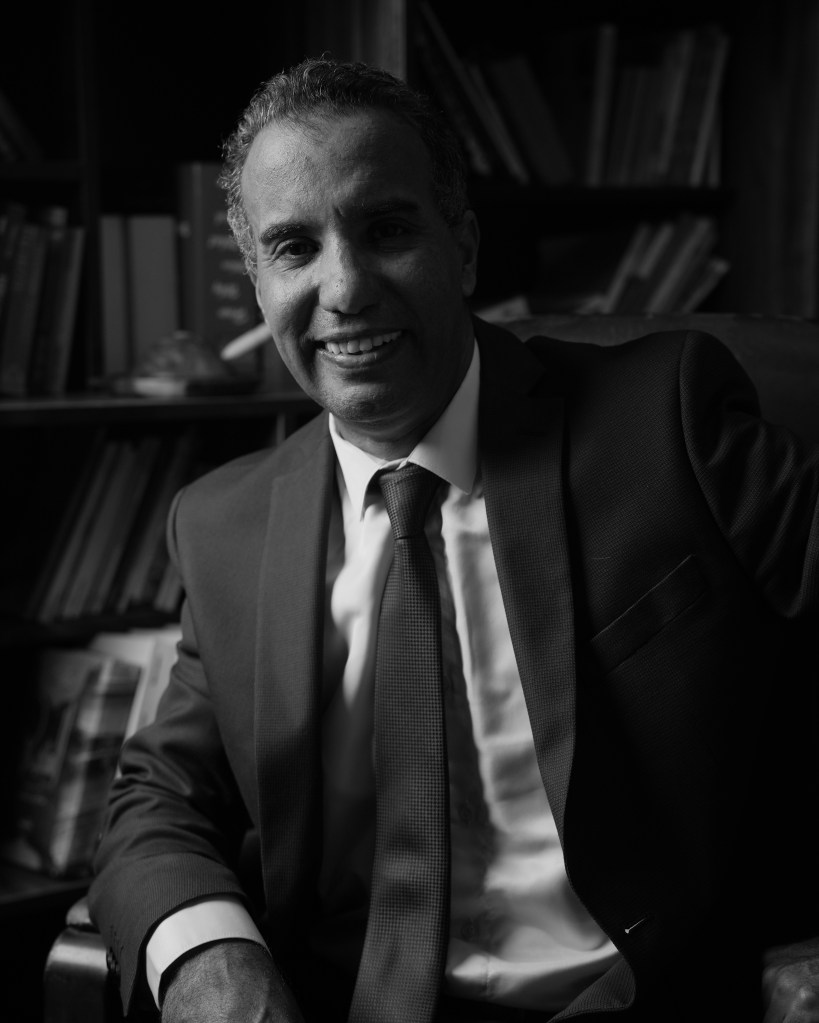
Brahim Laaraibi is a writer and teacher trainer from Tantan in the south of Morocco. His fiction moves between the political and the deeply personal, tracing the human cost of silence, complicity, and the quiet violence of systems that decide who gets to want what. Usually with a wry, sarcastic bite, he writes about the lives that get arranged, suppressed, or simply outrun. His work has appeared in Asian Porch Lit Mag and other literary outlets.


Leave a Reply