By: Abrahem Laraibi
When a tired man opens his mouth, but the state puts words in it.
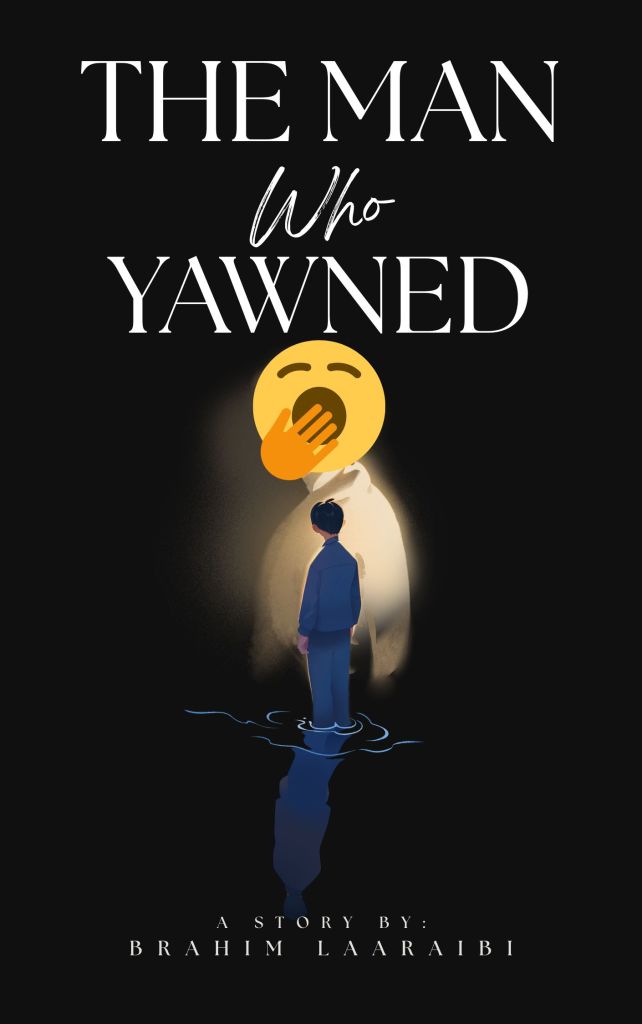
By the third photograph, Saleh had become the leader.
In the first, he stood beside the fountain with a loaf under his arm. In the second, his head tilted back. In the third, his mouth opened and his right hand rose towards his face.
The officer arranged them across the table.
“Start from the beginning.”
“I was tired.”
“Before that.”
“I was walking home.”
“Before that.”
“I was at work.”
The officer uncapped his pen.
“Now we’re getting somewhere.”
Behind him, a younger man sat at a computer. He had pushed his chair close to the wall so the door could open without striking it. Every time someone entered, he pulled his knees beneath the desk.
Saleh looked again at the photographs.
In the last one, a woman behind him held a sheet of cardboard above her head. Someone had written on it in thick letters. The officer had enlarged Saleh’s face until only the bottom of the message remained.
“Do you recognise yourself?”
“Yes.”
The younger man began to type.
“And the people behind you?”
“No.”
“You didn’t speak to them?”
“No.”
“You didn’t address them?”
“No.”
The officer turned the third photograph towards him.
“Then what were you saying?”
“Nothing.”
“Your mouth is open.”
“I was yawning.”
The typing stopped.
In the corridor, a telephone rang until someone lifted it and put it down again.
The officer put down his pen.
“Yawning.”
“Yes.”
“At a demonstration.”
“I was passing it.”
“While yawning.”
Saleh nodded.
The officer looked towards the younger man.
“Write that down.”
They had taken him from the bakery before the morning deliveries.
The first batch stood cooling on racks. Saleh had just pulled a tray from the oven when two men came through the side entrance, stepping over the sacks of flour.
One showed a card.
“Saleh?”
He put the tray down.
“Come with us.”
“I’ve got another batch in.”
“Someone else can take it out.”
“There’s no one else here yet.”
The man glanced at the oven.
“Then switch it off.”
Saleh reached for his jacket. The man beside the door took it from the hook and checked the pockets before handing it over.
Outside, the van’s rear window had been painted from within. Saleh sat on a bench that ran along one side, his knees touching the opposite wall.
He had flour on his wrist. He rubbed at it with his thumb until it rolled into the crease of his palm.
At the station, they took his belt, phone, and watch. Someone asked whether he had any illnesses.
“No.”
“Medication?”
“No.”
“Distinguishing marks?”
He showed the scar near his thumb.
The man filling in the form looked at it.
“What happened?”
“Oven door.”
The man wrote something shorter.
The officer tapped the first photograph.
“What time did you leave work?”
“Just after nine.”
“In the morning?”
“Yes.”
“What time did you start?”
“Seven the evening before.”
“Fourteen hours?”
“One of the men didn’t come.”
“Name?”
“Youssef.”
“Full name.”
Saleh gave it.
The officer wrote it down.
“Where does he live?”
“I don’t know.”
“You work fourteen hours because of a man whose address you don’t know?”
“I don’t visit him. I work with him.”
The officer placed his pen on the table.
“Let’s not make this difficult.”
Saleh lowered his eyes.
Above the filing cabinet hung a portrait of the head state. The photographer had caught him leaning forwards, one hand lifted, his mouth open around a word.
Saleh looked away.
“Why did you go through the Prince Square?”
“It’s on my way.”
“There were other routes.”
“They’re longer.”
“The square had been occupied.”
“I could still get through.”
“You chose to get through.”
“Yes.”
The officer turned to the younger man.
“He confirms that.”
The keys clicked.
“I confirm I was going home.”
“That’s what I said.”
Beyond the door, someone dragged a chair across the floor.
Saleh remembered the square in pieces: a delivery motorcycle propped against the fountain, a child trying to pull a placard from his mother’s hand, men standing beneath the municipal windows. People had left a passage along the pavement. He had walked through it with the loaf under his arm.
Then his jaw had begun to ache.
He had yawned once near the pharmacy and again beside the fountain. The second yawn had gone on so long that his eyes watered. His hand had caught the tears when he wiped his face.
He remembered thinking he should have bought milk.
“Who gave you the signal?”
Saleh looked up.
“What signal?”
“To begin.”
“I didn’t begin anything.”
The officer slid the second photograph over the first.
“Your head goes back.”
“Yes.”
“Then your mouth opens.”
“Yes.”
“Then the people behind you open theirs.”
Saleh bent over the picture.
A man near the fountain had his mouth open. So did the woman holding the cardboard.
“They were already shouting.”
“Chanting.”
“Whatever they were doing.”
“What were they chanting?”
“I wasn’t listening.”
“You walked through a demonstration without listening?”
“I’d been listening to ovens all night.”
The younger man looked at the floor.
The officer waited until he raised his head.
“Put that in too.”
Around noon, they brought water in a plastic cup.
Saleh drank half and set it beside the photographs. The officer moved the pictures away.
“What happened after you left?”
“I went home.”
“And?”
“I slept.”
“Until when?”
“After four.”
“You’re sure?”
“My wife woke me.”
“Why?”
“To eat.”
The officer opened another folder.
“At ten seventeen, officers attempted to clear the entrance to the municipal building. The demonstrators resisted. There were injuries.”
Saleh looked at the folder.
“I wasn’t there.”
“We know.”
For the first time that morning, he lifted his head.
The officer laid a page in front of him.
“You had already left.”
“Yes.”
“After setting things in motion.”
Saleh looked from the page to the photographs.
“I went to bed.”
“Exactly.”
The younger man’s chair creaked.
The officer pushed the page closer.
“This is your opportunity to explain your involvement.”
“I’ve explained.”
“Not your walking. Your involvement.”
“I don’t have any.”
“Then say who does.”
Saleh rubbed the scar on his thumb.
The officer watched him.
“Someone approached you at work?”
“No.”
“You were offered money?”
“No.”
“Someone threatened your family?”
“No.”
“Then you acted of your own accord.”
Saleh stopped rubbing his hand.
“I yawned.”
The officer leaned back.
“We’ve recorded that version.”
His wife came the following afternoon with a clean shirt and a bag of food.
They let her hand over the shirt. The food had to remain outside.
“What do they say you’ve done?”
Saleh sat opposite her, with a guard beside the door.
“Led the demonstration.”
She stared.
“You?”
“Yes.”
“But you don’t even speak at weddings.”
The guard shifted his weight.
His wife looked towards him, then back at Saleh.
“I went to the bakery. Your employer says he’ll confirm your hours.”
“He should.”
“He says the first day you were absent will come out of your wages.”
Saleh looked down at the shirt in his lap.
“And the others?”
“He hasn’t decided.”
She pressed her lips together.
“I told him you didn’t choose to miss work.”
“What did he say?”
“He knows.”
Through the wall came the sound of a bolt being drawn.
“Did you go to the square?”
“I went through it.”
“Did you stop?”
“Only to let people pass.”
“Did you say anything?”
“No.”
“You look ill.”
“I haven’t slept.”
“Still?”
“They keep the light on.”
She reached across the table, but the guard moved from the door.
“Time.”
She withdrew her hand.
“The lawyer’s coming.”
“What lawyer?”
“My brother found someone.”
“Can we pay?”
“She said we’d discuss it.”
His wife stood. At the doorway, she turned back.
“The food’s downstairs. Ask them for it.”
After she left, he asked.
No one knew which bag.
The lawyer’s name was Kabbadi. He opened his file before he sat.
“There’s a video.”
Saleh straightened.
“Of me?”
“From a shop opposite the fountain.”
“Then they’ll see.”
“It doesn’t have sound.”
“But they’ll see.”
He took out his phone.
The square appeared on the screen. A striped awning covered the top of the image. People crossed beneath it, some walking towards the gathering, others carrying shopping bags through the gap along the pavement.
Saleh watched himself enter from the left.
“There.”
“I know.”
He moved towards the fountain. A man stepped backwards into his path. Saleh paused, shifted the loaf beneath his arm, and waited. His head tipped back. His mouth opened. He lifted his hand.
Then he walked on.
The whole thing took less than twenty seconds.
“Play it again.”
Kabbadi did.
By the third viewing, Saleh could feel the ache of that yawn returning to his jaw.
“They’ve seen this?”
“Yes.”
“What did they say?”
“That it supports their account.”
He looked at him.
“You stopped. You faced the gathering. You made a gesture. Then you left.”
“I covered my mouth.”
“I can see that.”
“So can they.”
The lawyer put the phone away.
“Yes.”
On the morning of the hearing, a guard woke him before dawn.
“Up.”
Saleh had fallen asleep with one arm beneath his head. His fingers would not close.
“Where?”
“Court.”
They gave him his clean shirt.
In the van, three other men sat beside him. One had a split lip. Another kept asking the time, although none of them had a watch.
At the courthouse they waited in a room beneath the stairs. Footsteps crossed overhead. Dust fell from a crack in the ceiling whenever someone hurried.
The man with the split lip leaned against the wall and slept.
Saleh tried to do the same.
A guard opened the door.
“On your feet.”
The prosecutor held up the first photograph.
“The defendant positions himself at the front of the gathering.”
Kabbadi rose.
“He is on the pavement.”
“At the front.”
“In front of people does not mean in charge of them.”
The judge held out a hand for the photograph.
He examined it, then the second, then the third.
Saleh stood between two guards. His wife sat behind the lawyer. He could see the edge of her malahfa when he turned his head.
The prosecutor approached the clerk’s desk.
“The sequence shows the defendant raising his head and calling out. His arm follows, directing the participants. Within the hour, the gathering develops into violence.”
“More than an hour.”
The prosecutor turned.
Kabbadi kept her eyes on the judge.
“The footage places my client at the fountain at nine twelve. The police report records the first confrontation at ten seventeen.”
“Sixty-five minutes,” the prosecutor said.
“Yes.”
“Enough time.”
“For what?”
“For an instruction to take effect.”
The judge put the photographs down.
“We will view the recording.”
A clerk carried a laptop to the bench. The prosecutor and Kabbadi stood on either side.
Saleh remained where he was.
“May I see it?”
The judge looked over the screen.
“You were there.”
The clerk started the video.
Everyone at the bench leaned forwards.
They watched Saleh approach the fountain. They watched him pause.
“Here,” the prosecutor said.
“Let it run.”
His mouth opened. His hand rose. He walked out of the frame.
The judge removed his glasses.
“Again.”
They watched it again.
At the back of the courtroom, a bench creaked.
Kabbadi pointed to the screen.
“His eyes close. He covers his mouth. He continues walking.”
“The gesture could serve several purposes.”
“It could. That is not proof that it served the one alleged.”
The prosecutor straightened.
“The defendant admits he heard slogans.”
“He heard people in a public square.”
“He understood the nature of the gathering.”
“He understood that people had gathered.”
The judge raised his hand.
“Enough.”
He turned to Saleh.
“What were they saying?”
“I don’t know.”
“You told the investigator they were shouting.”
“They were.”
“About what?”
Saleh looked at his lawyer.
“Answer the court,” the judge said.
“I didn’t stop to listen.”
“But you stopped.”
“Someone stepped in front of me.”
“And your mouth?”
“I was yawning.”
A sound escaped from the benches.
The judge looked up.
“Anyone who wishes to laugh can do so outside.”
No one moved.
The officer who had questioned him gave evidence after the break.
He confirmed the photographs. He confirmed the arrest. He confirmed that Saleh had identified himself.
Kabbadi stood.
“Did anyone hear my client give an instruction?”
“The gathering was noisy.”
“Did anyone identify his voice?”
“Several people were speaking.”
“That wasn’t my question.”
“No.”
“Did you find any message connecting him to the organisers?”
“No.”
“Any calls?”
“No.”
“Any evidence that he knew them?”
“The investigation remains open.”
“After fourteen days, you have three photographs and a video of a man passing a fountain.”
The prosecutor stood.
“Counsel is making a speech.”
Kabbadi looked at the judge.
“I have one more question.”
He nodded.
“Did you ask the photographer for the images taken before these three?”
The officer shifted in his chair.
“We requested the relevant material.”
“Who decided what was relevant?”
“The department.”
“Did you see the earlier images?”
“No.”
The lawyer picked up a page.
“The photographer supplied the full sequence to the defence yesterday.”
The prosecutor rose again.
“We have not examined these.”
“Neither had I until yesterday.”
The judge held out his hand.
There were seven additional photographs.
In the first, Saleh approached with his lips closed.
In the second, his jaw began to drop.
In the third, a woman behind him already had both hands around her mouth.
In the last, Saleh walked away, wiping an eye.
The judge looked through them.
The prosecutor waited until the final image reached the top.
“None of these excludes the possibility of a spoken signal.”
Kabbadi set both palms on the desk.
“What evidence would?”
The judge looked at him.
He lowered his hands.
They sent Saleh downstairs while the court considered its decision.
By then, his hunger had passed. He sat with his elbows on his knees and watched a strip of sunlight reach beneath the door.
When the guard returned, he had to say Saleh’s name twice.
Upstairs, his wife had moved to the end of the bench.
The judge read from a page.
“The charge of directing acts of violence has not been established to the required standard.”
Saleh heard his wife draw breath.
“However, the defendant’s own account places him within an unauthorised gathering of whose nature he was aware.”
Kabbadi stood.
“My client crossed a public square.”
“The court has heard you.”
He remained on his feet.
The judge continued.
“His conduct, viewed in its context, contributed to the disturbance of public order.”
Saleh looked at the photographs on the clerk’s desk.
He waited for someone to explain which part.
“The court imposes a sentence of thirty days. In consideration of the defendant’s circumstances, and with time already served taken into account, the remainder is suspended.”
A guard touched Saleh’s elbow.
He did not move.
“You’re going home.”
They returned his belt, phone, and watch in a plastic bag.
The watch had stopped.
At the property desk, a clerk pushed a form towards him.
“Sign.”
Saleh read the top line, then the next.
“I didn’t get all this back.”
“What’s missing?”
“My wages. There was money in the jacket.”
The clerk checked a list.
“This is what came down.”
Saleh stood with the pen in his hand.
From the doorway, his wife watched him.
He signed.
Outside, sunlight struck the courthouse steps. Traffic moved around the square. Across the road, a man sold bread from a cart, lifting each loaf with a piece of paper.
His wife took his arm.
“Come. We’ll get a taxi.”
“We can walk.”
“You need to sleep.”
He nodded.
They had reached the pavement when the yawn began.
It pulled at the back of his throat, opening his jaw before he could stop it. He brought up his hand. At the courthouse entrance, a policeman turned towards them.
Saleh bent over his shoes and pretended to fix a lace.
His wife waited.
When he straightened, tears had gathered in his eyes.
“Are you all right?”
“Yes.”
He took her arm again.
They walked past the bread cart without stopping.


Leave a Reply