By: Brahim Laaraibi

“I need to talk to you,” she said on the phone, her voice tapering off, hesitant.
Tucking the phone to his ear, Isalmou stepped further from the boisterous chatter of his friends and replied, “Alright, I’m here at the usual spot, playing guitar with the guys. If it’s urgent, you can come over.”
“When I give you a beep, you’ll find me by the back gate of the park nearby,” she said, clipped, urgent.
“OK, I’ll keep an eye on my phone.”
He glanced at his phone: 9.30 pm. Late for her to walk the narrow alleyways towards the park. Her frail voice stayed with him. He left his friends and strode towards the park’s back gate. She shouldn’t wait alone in the dark.
He waved as she appeared. She walked towards him.
“What’s the matter, Zarma? You’ve got me worried.” He leaned forward.
“They want me to get married.”
He pulled back. “Married?”
“My mother.”
“But you’re… how old are you, sixteen?”
“Barely.” She looked down. “And they’ve already started talking about tying the knot.”
“What about school? What about…” He stopped himself. “I mean, what do you want?”
“Not this.” Her voice dropped. “My mother says a girl’s future is a husband, a house, kids. That’s it. And apparently this groom is some kind of opportunity she doesn’t want me to miss. Prosperous family, she said. I don’t even remember their name.”
“Prosperous.” He let out a short laugh and shook his head.
“I know.”
“Then just tell them no.”
“I wish I could.” She paused. “I thought my father would back me up. But he doesn’t seem to mind either.”
He was quiet for a moment. “Talk to them again. Maybe they’ll come around.” He shifted, clearing his throat. “Anyway. Don’t forget we’ve got a maths exam tomorrow. Teacher said to go over the last two weeks.”
Morning came before the night’s turmoil could settle. Zarma, in her school uniform, sat next to her friend Isalmou at their double-seat table. She glanced at the exam paper the teacher had placed in front of her, then looked away. Lost in thought, she jolted when Isalmou nudged her with his elbow.
When the bell rang, Zarma rushed out, heading out of school. Isalmou trailed after her, not caring about the rest of his classes.
“Zarma!” he called out as they exited through the main school gate. “Why didn’t you take my answer sheet? I slipped it under the table for you.”
She slowed, then turned a hard look at him. “Did I ask you to?”
“No,” he said, a sheepish smile creeping across his lips, “but you were just staring at the exam paper the whole time.”
“I guess you know why.” Her voice came out flat.
“Yeah, I get it now. I didn’t realise the situation was this serious.”
“It’s worse.” Her voice wobbled. “When I got back home last night, they’d already set the date for the wedding. My father suggested they combine the engagement and wedding into one ceremony. The groom’s coming for tea next weekend so we can get to know each other.”
“Has he ever even seen you?” Isalmou scratched his head.
“Apparently, yes. According to my mother, he’d seen me several times.”
He let out a short laugh. “Must’ve been captivated by your beauty.”
Zarma’s face stayed blank. “I’m not ready for this. Marriage… it’s too early. It’s a lot to handle, and I’m just not ready. Besides, I want to keep studying.”
“The groom might let you keep studying.” Isalmou ventured, but he shrank back under Zarma’s sharp glare.
“I mean… I’ve seen it happen. Or… at least I’ve heard of it,” he stammered, clearing his throat. “Plenty of girls get married and still study. Even my cousin, she got married and still goes to school. You know how it is here. Parents freak out as their daughters get older. They marry them off young so they can say they’ve done their duty and don’t have to worry anymore.”
Zarma stopped dead, her gaze hardened. She looked at him as though he had crossed a line. Isalmou stood still, looking back at her as loose strands of his wavy mullet tumbled across his forehead.
“Well, that’s not going to be my fate. Besides, I’m not a burden,” she snapped, her voice cold enough to cut.
The stern look stayed with the seventeen-year-old boy, and for days he hesitated to call or talk to her. He feared his clumsy comments had hurt her, and her irregular absence from school only deepened his suspicions. Yet he had no idea how to help. Should he tell her to rebel against her family? Suggest she run away? Or urge her to obey her parents, who, in the end, wanted the best for their daughter?
As the weekend sagged into its final hours, a jittery unease closed in around him, and he finally sent her a message. Her reply came in a flash, so fast it felt as if she had been waiting all along, desperate to talk. “Meet me now at the same place,” he read.
“So, how did it go?” he asked as she sank on the wooden bench beside him. Crossing her arms, she let out a slow sigh—a small lopsided smile ghosting over her lips.
“Nothing special. He came, I made tea, we talked, and he left.”
A moment of silence stretched between them, filled only by the lone chirp of a cricket in the grass behind them. A warm breeze stirred the night air, gently rustling her hair.
Then she broke the stillness, her voice faltering just enough to betray her nerves. “Do you still have the phone number of the migrant smuggler?”
He turned, frowning. “Migrant smuggler?”
“Yeah,” she said, forcing herself to meet his gaze. “The one you contacted when you wanted to leave.”
“Ah, yes.” His expression softened, eyes lost somewhere else. “You still remember that.” He leaned back, his voice soft with something unresolved. “Yeah, I had the intention to leave, but here I am, despite everything.”
“Yeah, I know. You told me, remember? I still remember how mad you were at your dad for banning the guitar thing. And I was the only one you told about the plan to leave.” She paused. “But you never told me why you dropped it. I never asked either, but… I was glad you did.” Her eyes held him a moment longer than they should have, then she looked away, as if she were guarding something that, once spoken, could not be taken back.
He let his head drop, eyes tracing the stars as he stretched out across the bench, legs sprawled. “Truth is, I didn’t have the money,” he mumbled. Then, almost to himself, “I mean… I’ve got the talent, I know that. But I want it to be real, you know? Not just messing around. My dad thinks it’s a joke—something that’s got no place in our family, in our tribe. Like it’s shameful or whatever.”
“What if I told you I’ll have the money?” she said, leaning forward, her fingers brushing the edge of the bench.
He shot upright, legs pulling in beneath him. “What?”
“You heard me.” She held his gaze. “I can sort it—for both of us. We pay the smuggler, get the boat, head to the Canary Islands. You play guitar for tourists, and I… well, I finally get out of this marriage.”
“You’re out of your mind,” he said, his voice climbing. He pulled away slightly, trying to mask the disbelief. “But where would you even get that much money?”
“I’ve got my ways,” she replied, snapping her fingers and cocking a hand on her hip.
“Zarma, we’re talking serious money here.”
“I know. You told me how much, remember?”
He looked at her sideways. “Did I?”
“You did.” Her voice didn’t waver. “And yeah, I can get it—not right now, but soon.”
She shifted, tucking one leg under her to face him straight. “So here’s what I need you to do. Get in touch with him. We’ll set up a meeting.”
He hesitated, searching her face. “When will you have it?”
She was quiet for a moment, as if she were measuring her words. Her voice dropped low. “Give me a few days.”
Zarma’s meetings with her thirty-year-old groom grew more frequent, but she kept her distance, giving nothing away—her gaze cautious, closed off. He took her to different parts of town and along the beaches, expecting the places they explored together to loosen her up, draw out some warmth, a longer word or two.
Content enough, he told himself: a girl this young arrived unmarked. No prior claims on her thinking, no habits to undo. She would learn what he taught her, and only that.
When the time came for the formal arrangements, the groom’s mother paid a visit to Zarma’s mother. It fell during the school spring break. Zarma insisted the engagement and wedding be held apart, and her mother read it as modesty, never suspecting that her daughter’s timeline had less to do with tradition than with the boat.
Through a string of messages, Isalmou kept her updated on the arrangements. The meeting with the smuggler had already taken place—her presence wasn’t needed. For the smuggler, only the money mattered. He demanded an advance as a guarantee. After a few hard exchanges, he agreed: the full payment on boarding.
Then the moment arrived.
As her parents drove off towards Elaaiun to run errands and deliver wedding invitations, Zarma slipped into the bedroom. Her heart knocked against her ribs as she crossed to the wooden dresser where the dowry money lay hidden. The groom’s mother had given it to her mother, neatly tucked away in thick straps of cash, meant to cover the wedding expenses. It nestled beneath a pile of folded linens, exactly where she knew it would be.
Outside, a Land Cruiser hulked in the dark, engine silent, coiled like a cheetah poised before the lunge. Zarma threw one last glance at the door, snatched the money from its hiding place, and slipped outside. She slid into the back seat, flanked by Isalmou, her hand still clutching the bag with the cash. Without a word, she pulled out the bundles and handed them to him.
“Did you count it?” Isalmou’s voice dropped, his eyes widening at the thick rolls of money.
“Yeah.” Her voice held steady despite the catch underneath it. “Each strap holds 10,000 dirhams. Four straps make 40,000.”
Nodding, Isalmou passed the money to the smuggler in the front seat. The man’s fingers ran through the bills with mechanical precision as the car pulled away, the landscape opening into an endless stretch of desert. They drove south, the wind picking up as they pulled away from Tarfaya, where the sea met the sand.
When the car came to a stop, Zarma stepped out, her legs shaky but resolved. In the distance, a small boat threaded through the darkness towards the shore, its engine fretting against the vast silence. Between the rocks, shadowy figures huddled, scurrying to the water like ghosts. Zarma and Isalmou were the last to join them.
“How many hours before we reach the Canary Islands?” Zarma said, her voice grazing the silence, lost beneath the lapping of the water and the hushed prattle of the harragas. Her fingers locked around Isalmou’s elbow as the boat came into full view—smaller than she had imagined, riding low, its hull worn to the colour of the sea.
“Eight hours, maybe less,” Isalmou replied, a backpack over one shoulder, his guitar bag across the other, his gaze fixed ahead. “The smuggler said we’re heading to the nearest island from here. Fuerteventura.”
The name dropped in the dark, as distant and uncertain as the horizon they would soon cross. Zarma glanced at the small boat, her body braced before her mind did.
As they approached, the others hurried aboard, their movements swift and silent. The smuggler, a wiry man with dark eyes hidden beneath a tattered cap, nodded once without a word as they stepped in. The engine rumbled to life—a low, uneasy sound swallowed almost immediately by the sea.
The night closed around them as they cut away from the rocky shore. Zarma, bundled in heavy clothing, glanced back one last time at the faint outline of land dissolving behind them. Her grip on Isalmou’s arm remained firm, each breath cost her something. The boat wallowed on the water, vast and indifferent on all sides. From time to time, the wind sheared the crests off the little waves and blew a fine spray over them, and only the stars above offered any sense of direction.
Hours passed. The hum of the motor and the swaying of the boat lulled some of the passengers into uneasy sleep, but Zarma could not rest. She watched the sea, her mind turning. Would we make it? What awaited us on the other side? What would happen back home? She glanced at Isalmou, whose expression was set and still, as if he too was steeling himself for whatever lay ahead.
The night air turned colder as they pressed deeper into the Atlantic. Now and then a body shifted. A cough. A child whimpering in sleep. Otherwise, only the creaking of the vessel and the steady churn of the motor. Zarma shifted in her seat. She nestled her head against Isalmou’s shoulder, and the tautness in her face slowly released. The stars glimmered overhead, mirrored in the dark, glassy water below.
Then, as the hours dragged on, the horizon cracked open with a distant light. The passengers stirred, eyes wide, something unnamed moving through their worn faces. Zarma leaned forward, breath held, her hands gripping the edge of the boat. The island rising out of the sea like an answer to a question no one had dared ask—Fuerteventura.
“We’re almost there,” Isalmou breathed. But something in his voice held back.
As they neared the shore, the smuggler cut the engine, and the boat nosed towards the beach. The sky was still dark, the first grey suggestion of dawn just grazing the horizon. In silence, the harragas climbed out, their feet sinking into cool, wet sand. Zarma hesitated for just a moment. Then Isalmou took her hand, and together, they stepped ashore.
In quick steps, the crowd dispersed, vanishing behind the rocky hills. Zarma and Isalmou stayed behind, moving as though the sand pulled at their feet, the island already feeling like a place they had always known. They sank onto the damp sand, the cold seeping through their clothes.
Zarma opened her handbag, her fingers brushing the smooth bills inside. She pulled out another strap of money and held it out to Isalmou, something close to a smile on her lips.
“This is for you, Isalmou,” she said. “And I have more for our survival.”
Isalmou stared at the money. He looked up at her, eyes searching her face. “Why are you giving me all this money?”
Zarma did not answer right away. She shrugged off the heavy jacket, letting it fall into the sand beside her, and took a long breath.
“Because it’s you who I have always wanted.”
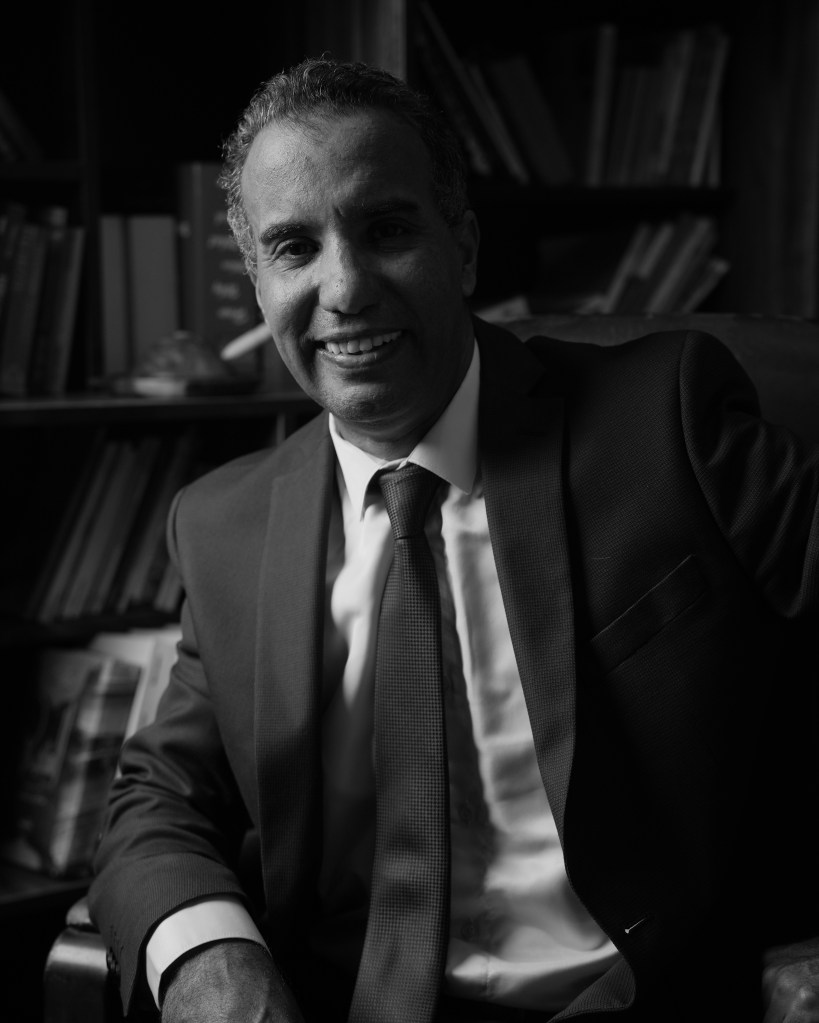
Brahim Laaraibi is a writer and teacher trainer from Tantan in the south of Morocco. His fiction moves between the political and the deeply personal, tracing the human cost of silence, complicity, and the quiet violence of systems that decide who gets to want what. Usually with a wry, sarcastic bite, he writes about the lives that get arranged, suppressed, or simply outrun. His work has appeared in Asian Porch Lit Mag and other literary outlets.
 BLFiction
Leave a comment